
Your first family ski trip is rarely the trip you imagined before you booked it — and that’s okay. Somewhere between the gear faff, the tired mornings, and the moment someone cries about their boots, it’s easy to lose sight of why you came. After eight years of doing this, here’s what’s actually made the difference between a stressful first trip and one we genuinely enjoyed.
Lower the bar for day one
The first day is rarely anyone’s best skiing, and it’s not supposed to be. Between new boots, a new resort, and kids adjusting to ski school for the first time, day one is about getting everyone oriented, not making progress. Treat it as a settling-in day rather than the start of the “real” holiday, and you’ll feel far less pressure to make it perfect.
Prep the night before, not the morning of
Mornings don’t need to be slow — they need to be prepped in advance. Lay out gear, layers, and snacks the night before rather than trying to sort everything while everyone’s still half-asleep. Pack a snack in a pocket rather than relying on a bag they might leave somewhere. A smooth, un-rushed morning isn’t about taking things slowly; it’s about removing the scramble so getting out the door doesn’t start the day with stress.
Get kids to their ski school drop-off on time, then use the couple of hours while they’re in lessons for your own skiing — the slopes tend to be quieter early on while lesson groups are still finding their feet, which makes for some of the best adult skiing of the day. Pick the kids up for lunch once lessons finish.
Slow afternoons after exciting mornings
The afternoon is where the pace should actually drop. After lunch, let kids show you the runs they did that morning in ski school — skiing something they already know builds real confidence, and it’s a genuinely nice way to reconnect as a family after being split up all morning. Stop for that hot chocolate along the way. Then stop skiing before anyone gets too tired, rather than pushing for one more run — that leftover energy is exactly what makes late-afternoon time playing in the snow together possible, which is often the part of the day kids remember best.
Expect at least one hard day
Somewhere in the week, there will be a day that goes sideways — a meltdown, a fall that shakes confidence, a kid who simply doesn’t want to ski that day. This is normal, not a sign you’ve done something wrong. Having a backup plan (a non-ski afternoon, hot chocolate and a break) rather than pushing through makes these days pass much faster.
Ski school isn’t optional — especially with mixed abilitiesIf you’re a strong skier and your partner or kids are beginners, ski school stops being a nice-to-have and becomes essential. Trying to teach your own kids while also wanting to actually ski yourself is a recipe for frustration on both sides — and mixed-ability families trying to stay together on the mountain often end up with someone bored, someone anxious, or both. Ski school lets each person progress at the right pace for them, and lets the stronger skiers in the family get real skiing in rather than constantly waiting or holding back. This is worth the cost even if you’re tempted to save money by teaching kids yourselves.
Don’t try to ski “with” your kids the whole time
If your kids are in ski school, resist the urge to fill every non-lesson hour skiing together as a family. Kids often need downtime after a morning of lessons — this is a good opportunity for the adults to get a couple of runs in on harder terrain, and for kids to rest before an afternoon session. Splitting up for parts of the day isn’t failing at a “family” holiday; it’s what makes the whole week sustainable.
Keep a few reliable comfort items on handA familiar snack, a favorite small toy, or — in our case — a compact travel game like Power Hungry Pets for apres-ski downtime, all help smooth over the inevitable rough patches. Familiarity matters more on a trip full of new experiences than people expect.
Remember why you’re doing this
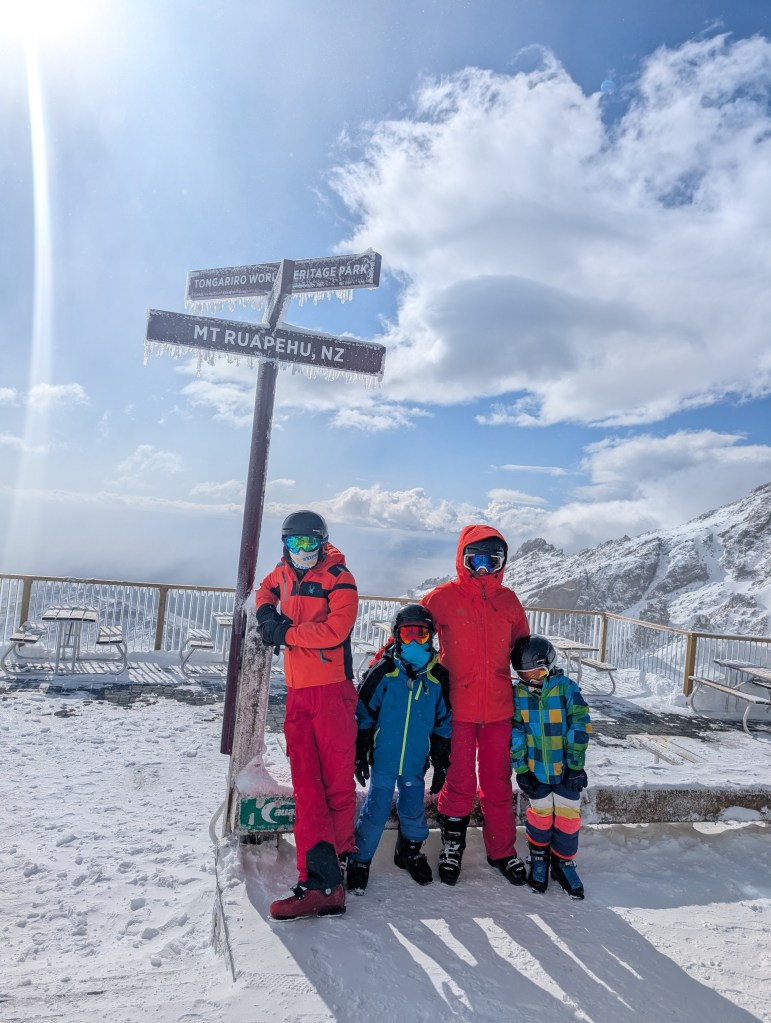
It’s easy to get caught up in logistics — boots, lift passes, ski school timings — and lose sight of the actual point: watching your kids experience snow, learn something new, and (usually) come away proud of themselves. The skiing itself matters less than people think in year one. What sticks with kids is the trip as a whole, not how many runs they managed. And who knows, if everyone enjoys it, you may all keep going and turn it into a family passion, like our family has!
For more content on skiing with family, check out my post: Skiing in Easter for your first family trip (and how to ensure snow in April!)

